Why we built Paybob: payments for every entrepreneur
Getting API access from a bank or mobile wallet is hard, and sometimes impossible. Paybob exists so any business can accept the payments its customers already use, automatically, from one checkout.

Written by Paybob Team
3 min read
Every day, in countries all over the world, new entrepreneurs start selling online. Their customers already know how they want to pay: mobile wallets, bank transfers and local payment methods. The hard part isn't finding customers. It's getting paid automatically.
The problem: no API, no automation
To confirm payments automatically, a business normally needs API access from its mobile financial service (MFS) provider or bank. For a new entrepreneur, that is often out of reach:
- Long applications and paperwork that a small or early-stage business can't easily meet.
- Local regulations that restrict who can get API access, making it impossible in some countries.
- Manual checking instead. Without an API, someone has to watch the inbox, match every payment to an order by hand, and hope nothing is missed.
We built Paybob so that getting paid automatically doesn't depend on who will give you an API.
Automation without a bank API
Paybob works with the accounts you already have. When a customer pays into your mobile wallet or bank account, the payment confirmation arrives on your phone by SMS, and Paybob takes it from there:
- Your customer pays with the method they already use, into your own wallet or bank account.
- Paybob's official Android app, approved by Google, detects the payment SMS on your phone and passes the details to your Paybob.
- Paybob verifies the payment at checkout, matching the amount, transaction ID and other sources against the order.
- The order is confirmed automatically, and your customer carries on.
One checkout for every gateway
Automation isn't only a problem for small businesses. Larger companies often run several gateways at once: Stripe, PayPal, Authorize.net and more. To see their transactions, someone has to log in to each platform separately.
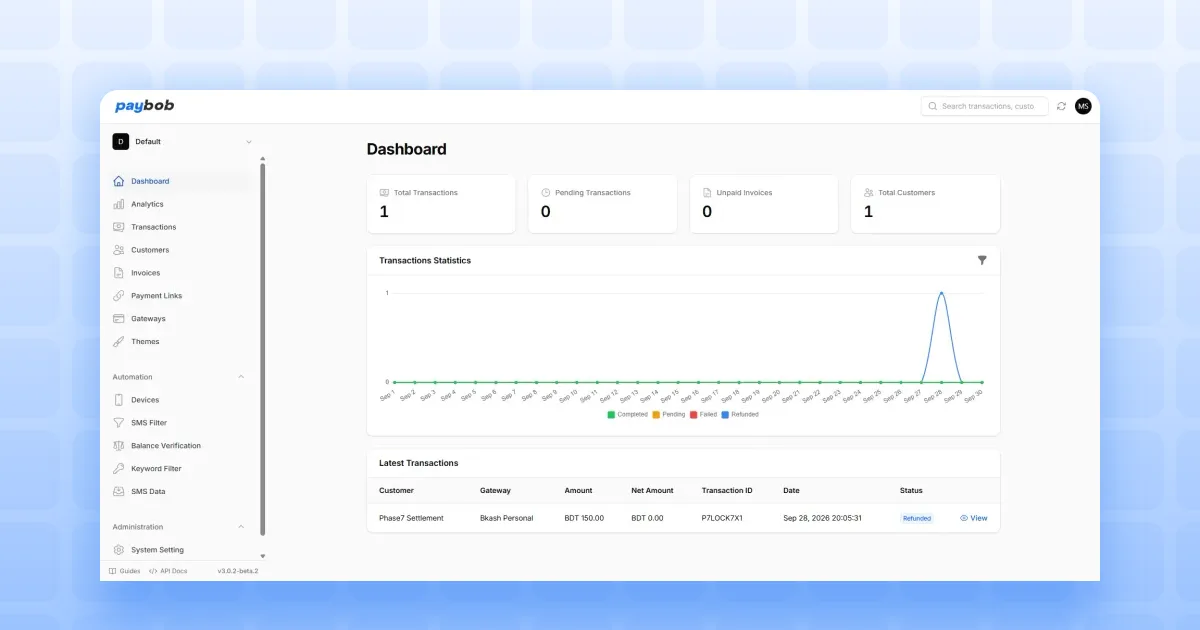
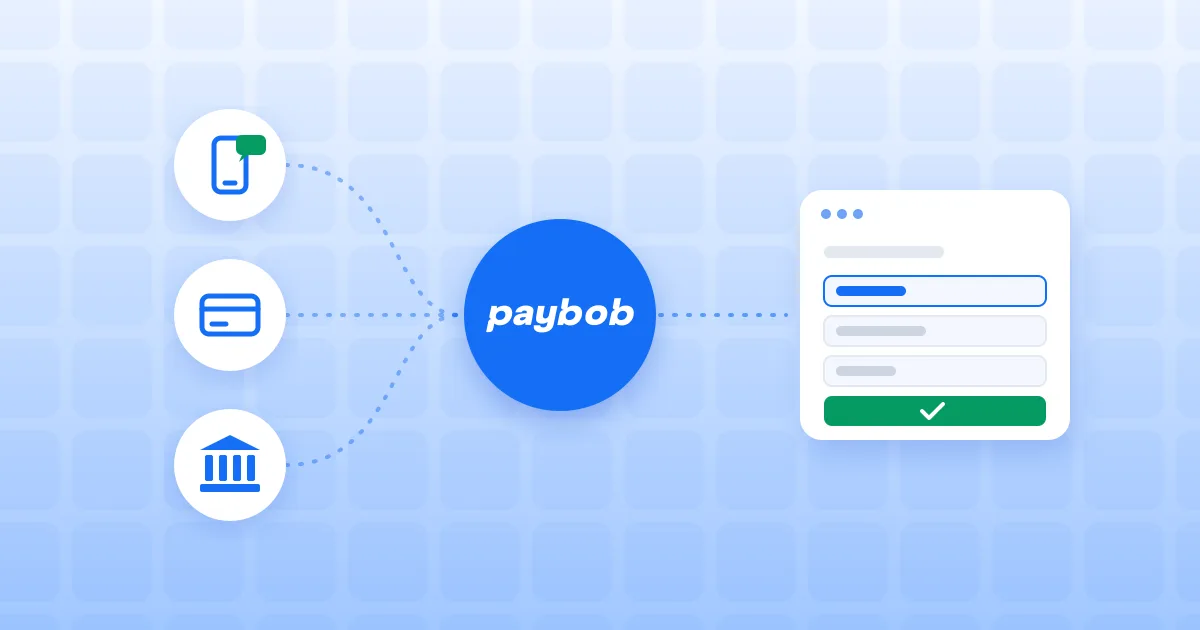
Paybob connects API gateways too. Card processors and local methods appear together in a single checkout, and every transaction lands in one dashboard, whichever way your customer paid.
Integrate once, not once per gateway
Usually, every new payment method means another integration, more developer time and more fees. With Paybob, your website or app integrates once:
- API gateways: add your credentials (for example from Stripe or PayPal) in Paybob's gateway settings.
- Manual gateways such as mobile wallets and bank accounts: add your account number in Paybob's gateway settings.
- That's it. Every gateway works through the same checkout, verified automatically. No extra integrations, no extra developer fees.
Every brand gets its own checkout
Running more than one brand? Paybob supports white-label checkout. Install Paybob once on a single domain, and give each brand its own checkout on its own domain. Your customers see your brand, not ours.
Hosted on your own server
Paybob is self-hosted. It runs on your own server, so your payment data stays on infrastructure you own and control, not on a third-party platform. You decide where it lives, who can access it and how it's backed up.
Our ambition is simple: any business, anywhere, should be able to accept the payments its customers already use, automatically.
That's why we built Paybob, and it's what we'll keep building toward: fewer barriers for new entrepreneurs, less manual work for growing teams, and full control for every business that uses it.